“Functional training” is one of the most fashionable terms in fitness, under which everything is sold: from CrossFit to exercises on a stability ball. The editorial team has looked into what functionality actually means, which exercises develop it, what the research confirms, and where science ends and marketing begins.
Where the term came from and what it means
The term “functional training” came from rehabilitation: physical therapists used it for exercises that restore a patient's ability to perform everyday actions — to stand up, walk, and lift objects. Later the concept passed into fitness and sport, where it acquired a much broader and sometimes blurred meaning.
In the most general sense, functional training is training aimed at improving a specific function: everyday, occupational, or athletic. Instead of the question “which muscle are we training?” it poses the question “which movement or which task are we improving?”
It is important to understand that functionality is relative. For an older person, standing up from a chair and carrying bags is functional; for a firefighter, carrying heavy equipment up stairs; for a footballer, accelerating and changing direction. The same exercise can be very functional for one person and useless for another.
That is why the editorial team suggests viewing functional training not as a separate “type of fitness” with kettlebells and ropes, but as a principle of program design: exercises are chosen by their transfer to the target activity.
Basic movement patterns
Most functional-training programs are built around several fundamental movement patterns that a person performs in life. Instead of a list of muscles, the coach thinks in categories of movements and ensures each of them is in the program.
- squat — standing up from a chair, getting up from the floor;
- hinge — lifting objects from the floor with a straight back;
- lunge and step — walking stairs, stepping up onto a step;
- press and pull — pushing and pulling objects;
- carry — bags, suitcases, a child in your arms;
- rotation and resisting rotation — torso turns and stability under an asymmetric load.
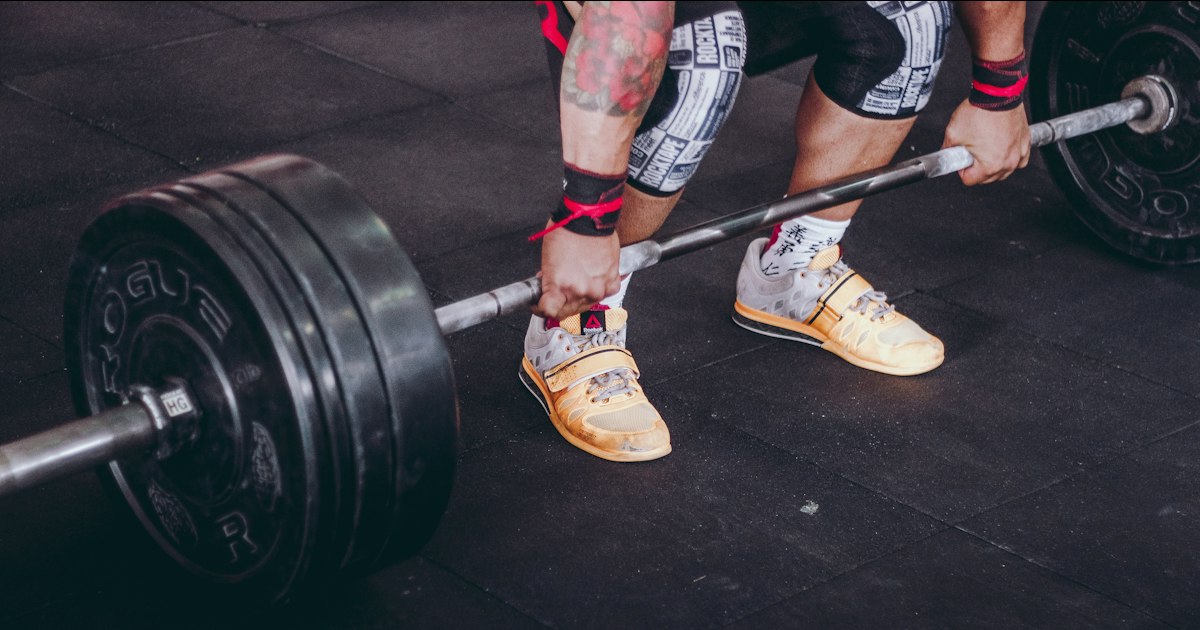
This approach coincides with classic strength preparation more than it seems. Squats, deadlifts, presses, and pull-ups are themselves functional movements. The only difference is that the functional approach deliberately adds unilateral work, carries, and exercises in different planes of movement.
For most people, a competent strength program with basic exercises is already functional enough. Exotic exercises are needed less often than it appears from social media.
What the research says
The most convincing data on functional training concern older people. A 2014 systematic review by Liu and colleagues showed that functional training improves the performance of everyday activities in older people, and that combining functional exercises with traditional strength work gives the best results.
In sport, much attention is drawn to the effect of strength on functional performance. A 2016 review by Suchomel, Nimphius, and Stone emphasizes that the level of muscle strength is closely related to jumping, sprinting, changing direction, and reducing injury risk. In other words, “classic” strength is one of the foundations of functionality.
As for training on unstable surfaces — BOSU, stability balls, balance platforms — the position of the Canadian Society for Exercise Physiology (Behm et al., 2010) is cautious: they increase the activation of stabilizer muscles but reduce the strength and power that can be developed. For athletes, the basis should remain exercises on a stable base with free weights.
The popular format of high-intensity functional training (HIFT), of which CrossFit-like programs are a variety, is described in a review by Feito and colleagues. It combines strength, gymnastic, and metabolic elements, but requires control of technique, especially when complex exercises are performed for time.
| Approach | Strengths | Limitations |
|---|---|---|
| Classic strength with free weights | Maximal strength, progression, ease of control | Less work in different planes |
| Exercises on an unstable base | Balance, rehabilitation | Less strength and power |
| High-intensity functional training | Well-rounded preparation, motivation | Risk of fatigue and technique breakdown |
| Rehabilitation-functional exercises | Transfer to daily life, safety | Low stimulus for the trained |
Common mistakes and myths
The first myth: functional training necessarily means complex acrobatic exercises, box jumps, and balancing on a ball. In reality, functionality is determined by transfer to the goal. A dumbbell squat for a person who has trouble rising from a chair is more functional than any “circus” exercise.
The second myth: machines are “non-functional” and therefore useless. Machines make it possible to load muscles safely, especially for beginners, people with injuries, or the elderly. They complement a program excellently, though they do not fully replace free weights.
The third mistake is imitating a sports movement with a weight — for example, performing a racket stroke with a band or dumbbell. Such an exercise changes the mechanics of the movement and does not necessarily transfer to performance. Strength and power are better developed with general exercises, and the skill — in the sport itself.
The fourth mistake is excessive fatigue. Circuit workouts with a large number of exercises for time create a feeling of “productivity,” but when technique breaks down from fatigue, injury risk rises and the training effect for strength declines.
How to integrate functional elements into a program
The simplest strategy is to leave basic strength exercises as the foundation and add functional elements as a supplement. For example, after the main part of the workout, perform a kettlebell carry (the farmer's walk), single-leg exercises, and torso anti-rotation exercises.
Unilateral exercises — Bulgarian split squats, single-leg Romanian deadlift, single-arm press — improve balance and reveal asymmetries between sides. It helps to have them in the program for people of any level.
For older people, the ACSM recommendations on neuromotor exercises (balance, coordination, walking) call for 2–3 sessions a week, roughly 20–30 minutes each. These exercises can be integrated into the warm-up or cool-down of a strength workout.
For athletes, the functional part should reflect the demands of the sport: jumps and accelerations, changes of direction, work in different planes. But the basis of power remains the level of general strength, so the strength base should not “dissolve” into variety.
Editorial conclusions
Functional training is not a separate sport but a principle: exercises are chosen by how they improve specific everyday, occupational, or athletic tasks.
The basis of functionality remains strength in the basic movement patterns: the squat, hinge, presses, pulls, and carries. Exercises on unstable surfaces and complex circuits are useful as a supplement, but not as the foundation.
The functional approach benefits older people and rehabilitation most, where it has been shown to improve everyday activity.
We also recommend our articles on core muscle training, on training after 50, and on strength training for women.
References
- Liu CJ, Shiroy DM, Jones LY, Clark DO. Systematic review of functional training on muscle strength, physical functioning, and activities of daily living in older adults. Eur Rev Aging Phys Act. 2014;11(2):95–106.
- Suchomel TJ, Nimphius S, Stone MH. The importance of muscular strength in athletic performance. Sports Med. 2016;46(10):1419–1449.
- Behm DG, Drinkwater EJ, Willardson JM, Cowley PM. The use of instability to train the core musculature. Appl Physiol Nutr Metab. 2010;35(1):91–108.
- Feito Y, Heinrich KM, Butcher SJ, Poston WSC. High-intensity functional training (HIFT): definition and research implications for improved fitness. Sports (Basel). 2018;6(3):76.
- Garber CE, Blissmer B, Deschenes MR, et al. American College of Sports Medicine position stand. Quantity and quality of exercise for developing and maintaining cardiorespiratory, musculoskeletal, and neuromotor fitness in apparently healthy adults. Med Sci Sports Exerc. 2011;43(7):1334–1359.
- Fragala MS, Cadore EL, Dorgo S, et al. Resistance training for older adults: position statement from the National Strength and Conditioning Association. J Strength Cond Res. 2019;33(8):2019–2052.
Andriy Melnyk
A strength-sports coach and author of programs for beginner and intermediate levels. Writes about training planning.